Loading... Please wait...



















Recent Posts
Gas Blowback pistol (GBB) Buying Guide
Posted by on
Gas Blowback Pistols: Pros, Cons & When They're the Right Airsoft Pistol for You
If you're weighing up whether to add a gas blowback pistol to your loadout, you're asking the right question. Gas blowback pistols are the most popular type of airsoft sidearm on the market, and for good reason - but they aren't the perfect choice for every player or every situation. This guide breaks down exactly what they do well, where they fall short, how much you should spend, and when you'd be better off with a completely different type of pistol.
Key Takeaways
-
A gas blowback airsoft pistol is the most realistic style of airsoft pistol available, featuring a moving metal slide, realistic recoil and gas-powered magazines that cycle like a real gun.
-
Gas blowback pistols offer realistic recoil and operation, making them outstanding in CQB, kill houses and practical pistol games thanks to fast follow-up shots, realistic handling and quick target transitions.
-
Main pros include immersion, training value, strong aftermarket support and excellent performance as an airsoft sidearm. Main cons are gas cost, regular maintenance needs and poor cold weather performance below roughly 10°C.
-
Budget guidance: expect to spend around £80–£130 for a solid starter gbb pistol, or £150–£250+ for serious skirmish and practical shooting use. If you play mainly in winter or hate maintenance, electric airsoft pistols or even budget friendly spring bb guns may serve you better.
-
Gas-powered airsoft pistols are the most popular type of airsoft sidearm, but always consider your intended use before buying - a gas pistol isn't automatically the best airsoft pistol for every player.
What Is a Gas Blowback Airsoft Pistol?
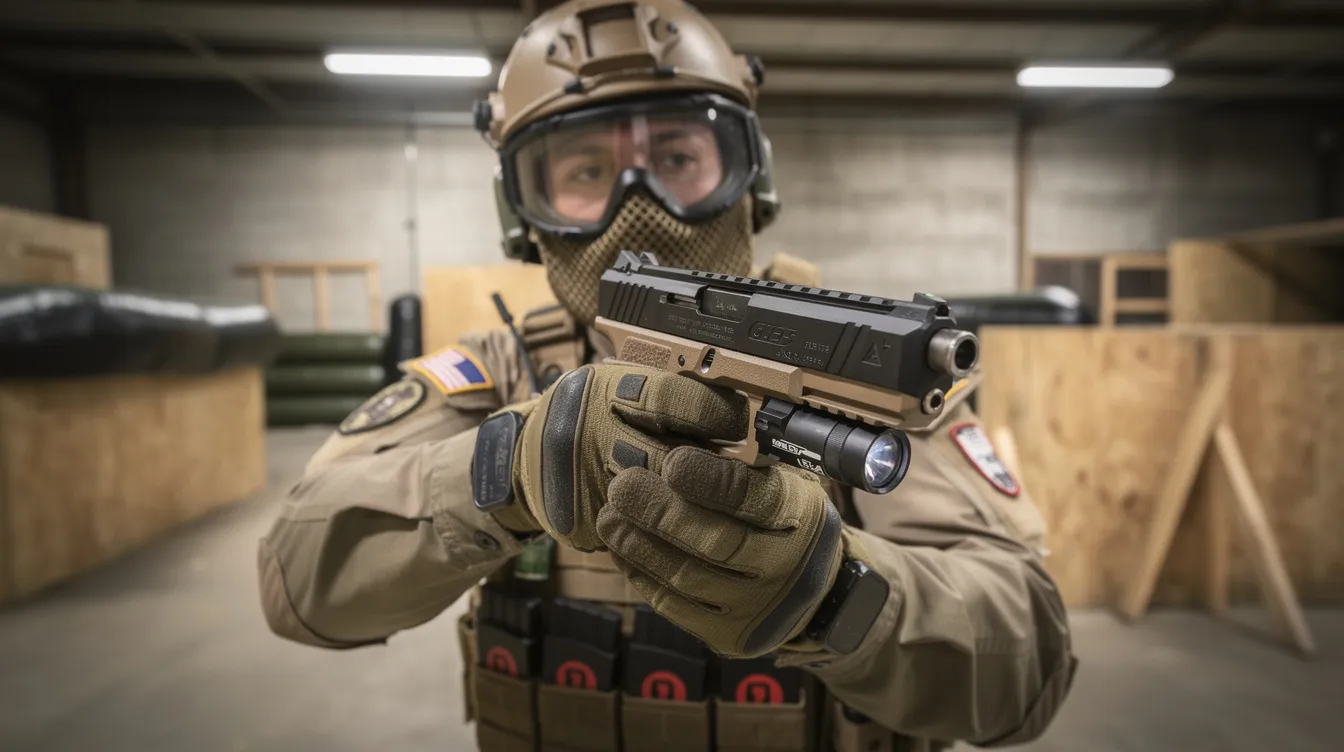
A gas blowback airsoft pistol is a replica handgun that stores compressed gas - either green gas (a propane and silicone blend) or 12g CO₂ capsules - inside the magazine. When you pull the trigger, a burst of that gas propels a 6mm plastic BB down the barrel. Simultaneously, part of the gas drives the slide rearward to create a realistic blowback action, cocking the hammer and chambering the next round automatically. This is what separates a gas blowback from simpler airsoft gun designs.
Here's how GBBs compare to other airsoft platforms at a glance:
-
Gas blowback (GBB): Moving slide, semi-automatic fire, realistic recoil, gas-powered magazines. Examples include the Glock 17 GBB, tokyo marui Hi-Capa 5.1 and the Umarex Glock 19X.
-
Non blowback gas pistols: No moving slide; quieter and more gas-efficient, but far less immersive. Suited for stealth roles.
-
Electric airsoft pistols (AEPs): Battery powered, very low recoil, stable in cold weather. Lack the realism and feedback of gas airsoft pistols.
-
Spring pistols: Require manual cocking between each shot. Spring-powered airsoft pistols require manual cocking to fire, making them cheap but slow - poor choices for serious skirmishing.
Most modern gas airsoft pistols are GBBs, and many feature working controls that mirror real steel pistols: slide lock, magazine release, safety or decocker, and last-round lock-back. The Glock 17 Gen 5 features improved gas efficiency and ambidextrous controls, making it a particularly faithful replica.
In UK fields, a typical gas blowback pistol shoots around 280–330 FPS with 0.20g BBs, comfortably within CQB and standard outdoor site limits of roughly 1.00–1.13 joules.
How Gas Blowback Pistols Work (In Practical Terms)
Understanding the firing cycle helps you troubleshoot problems and get better performance. Here's how it works in plain language:
-
Fill the magazine with green gas or insert a 12g CO₂ capsule (depending on pistol design). Gas pistols typically use green gas or CO2 for operation.
-
Load BBs into the magazine. Most GBB magazines hold 20–30 BBs, meaning frequent reloads are part of the experience.
-
Insert the magazine and rack the slide to chamber the first BB.
-
Pull the trigger. The hammer or striker drops, opening the gas valve. A burst of compressed gas splits: some propels the BB forward, the rest forces the slide rearward.
-
The slide cycles back under gas pressure, compresses the recoil spring, and vents the spent gas. The slide cycles back to chamber the next BB as it returns forward under spring tension.
Gas blowback pistols use pressurised gas to operate, and CO2-powered pistols shoot at higher pressures than green gas models - resulting in snappier recoil but more wear on internals. GBB pistols typically fire 6mm plastic BBs in semi-auto mode.
Key internal parts that affect performance:
-
Nozzle and valve assembly - controls gas release and blowback snappiness
-
Hop-up unit and bucking - adds backspin for range and accuracy
-
Inner barrel - length, bore diameter and material influence precision. A tighter bore (6.01–6.03mm) generally improves accuracy outdoors.
The cool-down effect: Gas blowback pistols can experience a cool-down effect during rapid fire. As you shoot quickly, the magazine temperature drops, reducing gas pressure. The result is sluggish slide cycling, inconsistent FPS and shorter range. This is particularly pronounced with green gas below about 10°C, where vapour pressure falls sharply.
Most modern gas blowback airsoft pistols include adjustable hop-up, letting you fine-tune for 0.25g–0.32g BBs for best range and consistent shot performance outdoors.
Pros of Gas Blowback Pistols for Airsoft Skirmishing
Gas blowback pistols aren't just realistic toys - they deliver tangible advantages in actual games. Here's what makes them worth the investment:
-
Realism and immersion: The strong recoil impulse on models like the WE 1911 or KJW CZ P-09 creates genuine shooting feedback. Working slides, realistic field-stripping and faithful weight distribution make a gas blowback pistol feel worlds apart from a non-recoiling electric pistol. The Tokyo Marui Hi-Capa 5.1 is highly regarded for performance and is one of the most satisfying platforms to shoot.
-
Fast follow-up shots: Semi automatic fire with short, light triggers on Glock 17 and Hi-Capa style pistols allows rapid double-taps and fast target acquisition in CQB scenarios and tight angles. Gas pistols typically have a higher rate of fire than spring models, which matters enormously in close quarters.
-
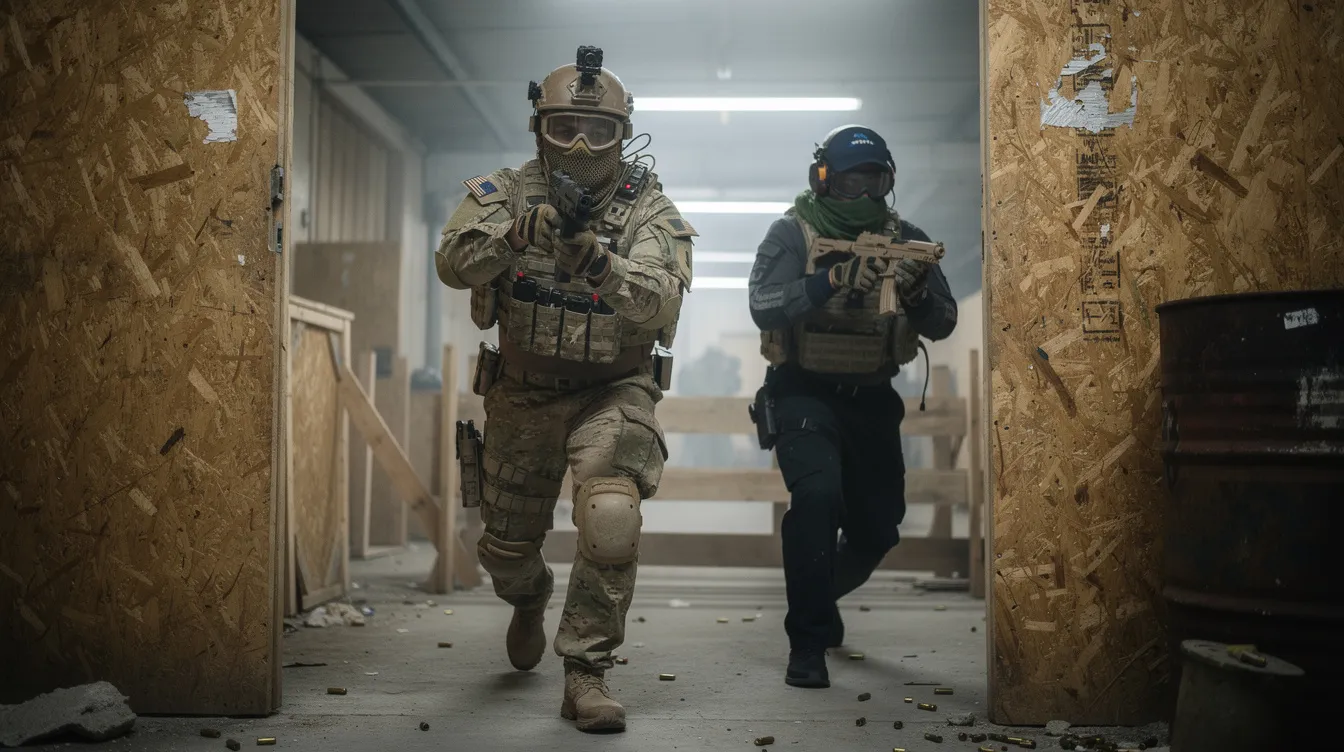
Excellent as a CQB primary: In indoor sites and kill houses, a gas blowback pistol can be your main airsoft gun. It's lighter, more agile and easier to manoeuvre around doorways than a full-size assault rifle or even a compact SMG.
-
Training and skills transfer: GBBs are widely used for drawing from holsters, reload drills and target transitions because grip angle, control placement and weight are close to real handguns. Law enforcement agencies and security trainers regularly use gas blowback airsoft pistols in shoot-houses for safe, low-cost simulation.
-
Customisation and upgrade potential: Look for aftermarket support for parts and upgrades - platforms like Tokyo Marui Hi-Capa and the Glock series have a huge range of available slides, barrels, hop-up units, triggers and magazines from different brands, including Armourer Works, Army Armament, and King Arms. Hi-Capa pistols are known for high round count and reliability, making them a favourite foundation for race gun builds.
-
Engagement speed in close quarters: Compared with bolt-action or spring pistols, a gas blowback pistol lets you react instantly when rounding corners or clearing rooms. That split-second advantage matters.
Cons & Limitations of Gas Blowback Pistols
No airsoft platform is perfect. Here are the real-world drawbacks you need to weigh up:
-
Gas cost and running expenses: Each fill of green gas gives roughly one to three magazines of shots before needing a refill. High operating costs for GBB pistols arise from purchasing gas and magazines over a full season of play. Compare that to an electric pistol where a single battery charge can last an entire game day.
-
Temperature sensitivity: Cold weather affects GBB pistol performance due to decreased gas pressure. Most GBB pistols operate best in warm weather conditions, and performance noticeably drops below about 10°C - slides become sluggish, range shrinks and FPS becomes inconsistent. UK winter games expose this weakness quickly.
-
Cool-down during rapid fire: Rapid firing can lead to a cool-down effect in gas pistols, especially on slim magazines like 1911 single-stacks that have less thermal mass. Your first five shots may be crisp, then the next five feel weak as the mag temperature plunges.
-
More maintenance than AEPs: Seals, O-rings and slide rails need regular silicone oil, cleaning and occasional replacement. Electric airsoft pistols lack recoil and realism compared to gas models, but they're far more "fit and forget" when it comes to upkeep.
-
Magazine fragility and cost: GBB magazines are heavy, mechanically complex and expensive - often £25–£45 each. Carrying three to five for serious play adds £75–£225 to your total budget. Drop one on concrete and you risk cracking feed lips or damaging gas seals.
-
Noise and stealth: The blowback action creates noticeable mechanical noise from the slide cycling and gas venting. For snipers or very stealthy players, a non blowback gas pistol or quiet AEP is the better choice.
Gas Blowback Pistols in Different Game Styles
A gas blowback pistol's effectiveness varies enormously depending on where and how you play. Here's how they perform across different airsoft contexts:
-
CQB and kill houses: This is where gas blowback pistols absolutely shine. Engagement distances of 5–20 metres, quick target transitions, light weight and easy pie-ing of corners make a GBB the weapon of choice. Models like the umarex glock 18C in full-auto mode or the AAP-01 can dominate tight corridors. The realistic blowback action also helps you feel each shot, making split-second hit calls easier.
-
Outdoor skirmishes: Here, a gas blowback pistol usually serves as a sidearm backing up an AEG or sniper rifle. Limited range compared to rifle airsoft platforms means you'll draw it only when enemies close in - but that's exactly when its speed and compact design pay off. Heavier BBs (0.28–0.30g) and a well-tuned hop-up help extend effective range.
-
Kill house and room clearing specifics: Realistic recoil and working controls help you practise slice-the-pie techniques, door entries and communication drills. Optics-ready pistols with a MOS-cut slide or rail-mounted red dot allow fast target acquisition in low light. Pistol features like ambidextrous controls and last-round slide lock add to the training value.
-
MilSim and roleplay events: For immersion at scenario events, accurate replicas such as SIG M17/M18 clones, 1911 variants or police-issue style Glocks serve as authentic replica sidearms that enhance the experience. The full metal construction and faithful markings on quality GBBs contribute to the atmosphere.
-
Backup for snipers and DMR users: A compact gas blowback pistol like a Glock 19 or FN 5-7 is ideal when enemies push inside your sniper rifle minimum engagement distance. Keep it in a holster, draw fast, deal with the threat, then return to your primary.
Target Shooting & Practical Pistol Games with GBBs
Gas blowback pistols aren't just for skirmishing. They've become the standard for several non-combat airsoft disciplines:
-
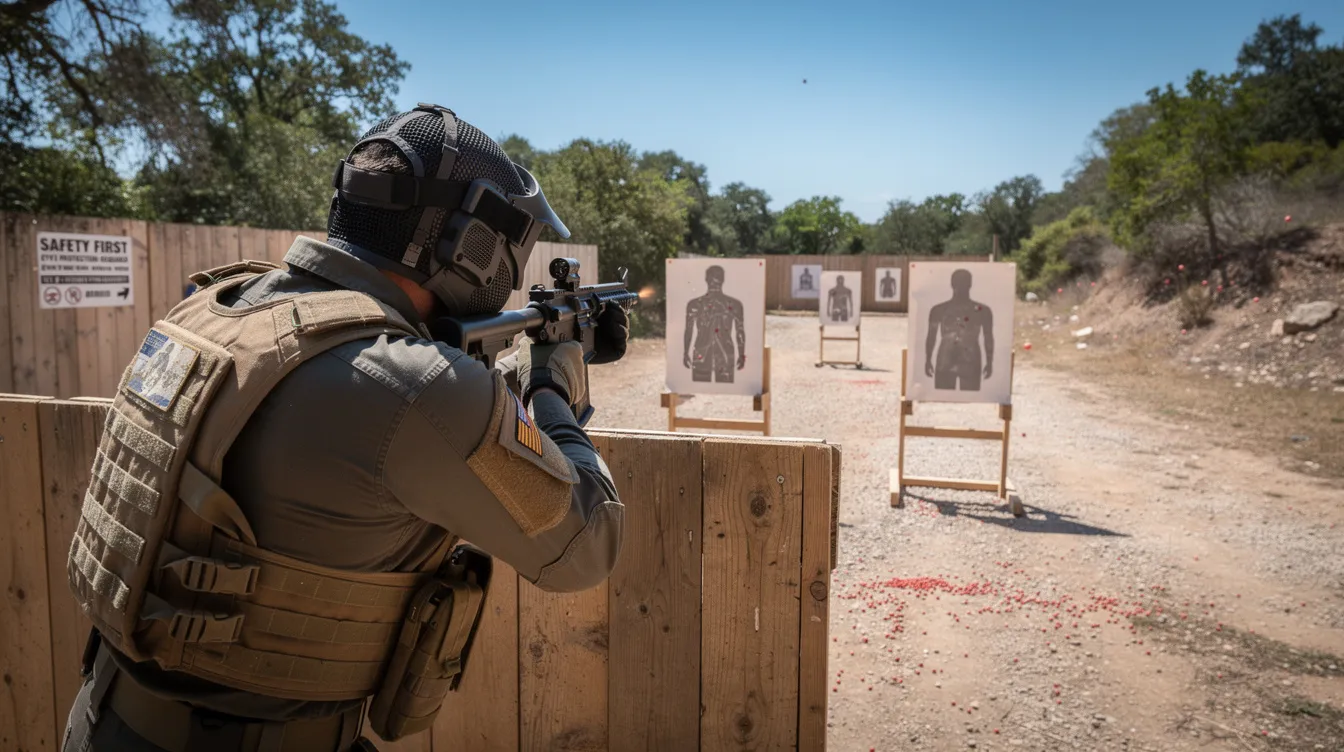
Static target shooting: With a quality gbb pistol, expect consistent groupings at 10–25 metres. A tightbore inner barrel, tuned hop-up and 0.28–0.30g BBs significantly improve precision. Models like the Novritsch SSP series or the TM Hi-Capa Gold Match are built specifically for this kind of consistent performance.
-
Practical pistol and IPSC-style games: Gas blowback pistols are the standard for airsoft practical shooting, with fast draw, reload and movement drills that mirror real-steel competition. Race-gun style hi capa builds, optic-ready Glocks and models from brands like armorer works are popular with seasoned players. These courses demand reliable performance under pressure - the pistol offers fast cycling, crisp trigger reset and smooth reloads.
-
Trigger feel and reset: Competition-oriented gas airsoft pistols often have light, crisp triggers and short reset, making them excellent for speed shooting against timers. This is where serious players invest in upgraded trigger assemblies and hammer springs.
-
Training for real-world handling: The Glock 17 Gen 3 is popular for training and dry firing drills. Grip angle, control placement and weight closely match real handguns, building genuine muscle memory for drawing, reloading and malfunction clearing. Gas blowback pistols offer realistic recoil and operation that simply can't be replicated by electric or spring alternatives.
-
Plinking and informal practice: For back-garden shooting (where legal), a GBB offers satisfying realistic recoil and feedback compared with an electric pistol or low-end bb gun. It's casual play with genuine tactile reward.
Budget vs High-End Gas Blowback Pistols: How Much Should You Spend?
Prices below are in UK pounds sterling and reflect the 2025–2026 market.
-
Entry-level (£60–£100): Budget gas airsoft pistols in this range typically feature pot-metal slides, basic hop-ups and limited cold weather resilience. Suitable for casual play or occasional CQB, but not for weekly skirmish abuse or competition. Gas efficiency tends to be lower, and you may find yourself wanting upgrades quickly. These are budget friendly entry points to see if you enjoy the platform.
-
Mid-range sweet spot (£100–£160): This is where many reliable, skirmish-ready GBBs sit. The WE G17 Gen 3 at roughly £125 offers a full metal slide, 24+1 round capacity and approximately 320 FPS on green gas. The WE G17 Gen 5 with improved gas efficiency sits around £115–£130. KJW, CZ-licensed models and some Glock replicas also live here. Decent hop-ups, better metallurgy and stronger aftermarket support make this the ideal bracket for your first sidearm.
-
Enthusiast and competition tier (£170–£250+): High-end tokyo marui pistols, licensed taran tactical innovations race builds, full CNC-machined platforms and premium gas powered airsoft pistols live here. These prioritise accuracy, fast cycling and durability for frequent game days or practical pistol events. If budget is no problem, this is where excellent performance and reliability meet. Metal construction, match-grade barrels and optics-ready slides are standard.
-
Magazine and gas budget: Factor in at least three to five magazines for serious play. At £25–£45 per magazine, that's an additional £75–£225. A season's worth of green gas or CO₂ cartridges adds further running cost. Don't forget replacement buckings and O-rings - small costs that add up.
-
When to buy budget vs go all-in: Beginners unsure about airsoft should start in the lower mid-range with a proven platform. Airsoft enthusiasts already committed to weekly CQB or pistol-only nights benefit from investing early in a robust, upgradable gun.
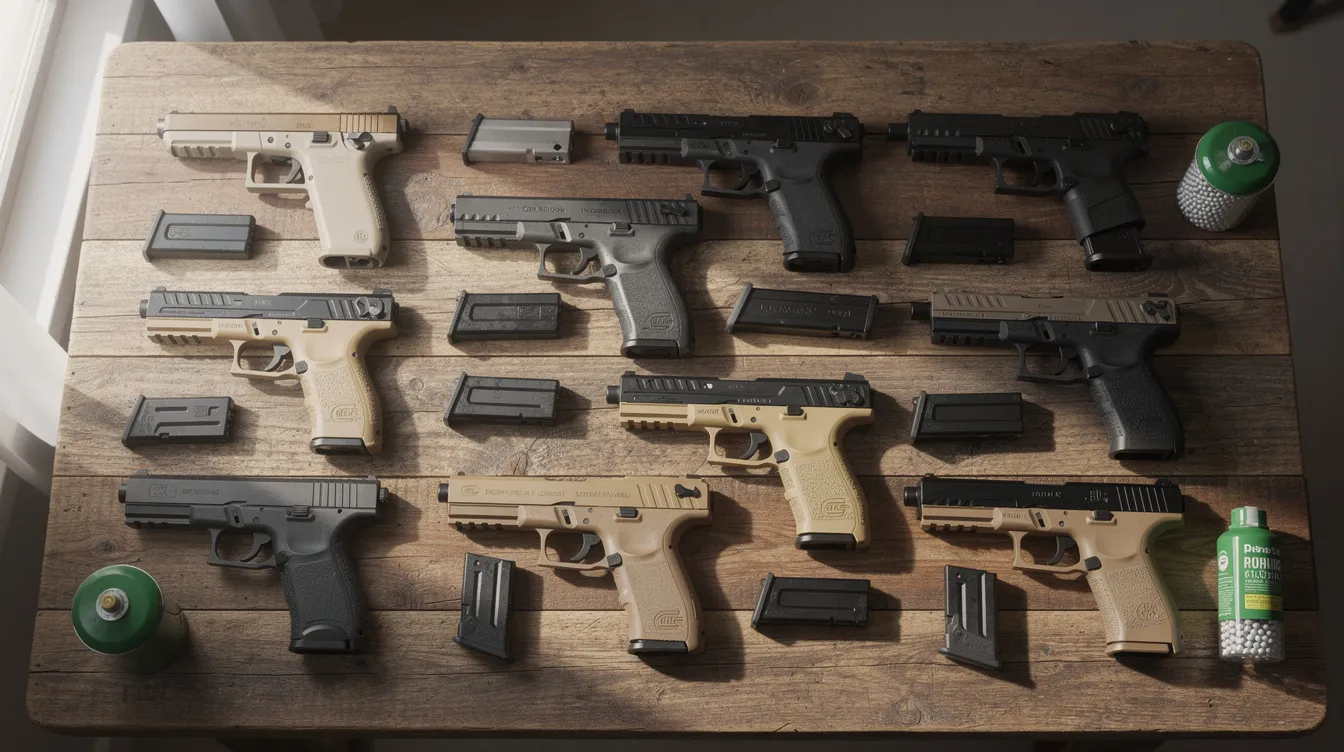
Gas vs Electric vs Spring Pistols: When to Choose a Different Type
A gas blowback isn't always the answer. Here's when each alternative wins:
-
Gas vs electric pistol (AEP): Electric airsoft pistols like the Cyma CM.125 or TTI-branded AEPs offer much better consistency in cold weather, lower running costs and minimal maintenance. They lack recoil and realism compared to gas models, but for winter events or players who value reliable performance over immersion, an AEP is the smarter buy.
-
Gas vs spring pistols: Spring pistols and cheap bb guns (often under £20–£30) are fine for very casual backyard use. Spring-powered airsoft pistols require manual cocking to fire, which means slow follow-up shots and weak power - poor choices for serious skirmishing. Gas pistols typically have a higher rate of fire than spring models by a wide margin.
-
Gas vs non blowback gas: Non blowback gas airsoft pistols trade recoil for silence and gas efficiency. They're specifically recommended for sniper backups or very stealthy players who fire rarely but need every shot to count. You won't get the satisfying kick, but you'll get more shots per gas fill.
-
When an AEP is the smarter buy:
-
Very cold climates or winter-heavy schedules
-
Players who want a low-maintenance, always-ready sidearm
-
Long weekend MilSim events where charging one battery is easier than hauling multiple gas cans and magazines
-
Those who prefer keeping ongoing costs to batteries and BBs only
-
-
When to step up to a rifle instead: If you mainly play outdoor woodland or long-range sites, your first serious purchase should still be an AEG rifle. A gas powered pistol makes an excellent secondary, but it won't match a rifle's range, ammo capacity or sustained fire. Add the gas blowback pistol to your airsoft collection later.
Choosing the Right Gas Blowback Pistol for Your Role
Consider your intended use when choosing a gas pistol. The right pick depends on what you'll actually do with it:
-
CQB and pistol-only nights: Compact to full-size gas blowback pistols with high-capacity magazines - hi capa, Glock 17/19, AAP-01 - paired with a weapon light or micro red dot if the site allows low-light play. Prioritise a platform with strong aftermarket support so you can upgrade over time.
-
Outdoor rifleman sidearm: A durable, simple GBB with good holster compatibility. The glock series, SIG M17/M18 style and 1911s all work well. Look for metal slide construction and proven reliability - this gun sits in a holster all day and must fire when you need it.
-
Sniper or DMR backup: Slim, easy-to-holster pistols like the FN 5-7, Glock 19 or compact 1911. A compact design with a threaded barrel for a suppressor can help maintain stealth. Non blowback or partial-blowback designs maximise gas efficiency for the rare but critical shot.
-
Practical pistol competitor: Optic-ready or race-gun platforms with magwells, extended controls and reliable gas systems. Hi-Capa race builds from different brands remain the gold standard. A crisp trigger and short reset are non-negotiable for speed shooting.
-
Collector or movie replica fan: GBBs are the best choice if you want iconic replicas for your airsoft collection. Think Desert Eagle, john wick Pit Viper or Sand Viper, classic 1911s, or anime-inspired models. The best examples combine authentic replica aesthetics with functional gas blowback internals, so they look right and shoot well. Full metal construction and licensed markings elevate the experience.
Running & Maintaining a Gas Blowback Pistol
A gas blowback pistol rewards players who look after it and punishes those who don't. Here are the essentials:
-
Basic routine after game days: Wipe dirt and debris from slide rails. Add a drop of 100% silicone oil to O-rings and moving parts. Use silicone spray to lubricate moving parts regularly. Store the pistol clean and dry, ideally in a case or padded bag.
-
Magazine care: Keep the mag feed lips clean and free of grit. Check for gas leaks around the base plate and fill valve. Store magazines with a small amount of gas to keep seals seated, but avoid overfilling gas magazines to maintain efficiency and prevent seal damage. Never leave loaded mags in a hot car - heat can cause dangerous over-pressurisation.
-
Gas choice: Use the gas type your manufacturer recommends. Standard green gas suits most GBBs; some pistols accept higher-pressure CO₂ or "red gas" for cold weather play, but only if the frame, slide and internals are rated for it. Going beyond spec accelerates wear.
-
Hop-up tuning: Slightly heavier BBs (0.25g–0.30g) paired with careful hop adjustment improve consistency for both skirmishing and target shooting. Clean the inner barrel to maintain accuracy - a dirty barrel is the number-one cause of flyers and inconsistent groupings. Regular lubrication keeps seals in good condition over time.
-
Common issues and fixes:
-
Inconsistent FPS or weak blowback - check gas level, mag temperature, and valve seals. Keep magazines warm in cold weather to prevent a performance drop.
-
Failure to lock back - inspect the magazine follower and feed lips; lubricate the slide stop.
-
Slide binding or stiffness - clean and oil slide rails; check barrel alignment.
-
Who Should (and Shouldn't) Buy a Gas Blowback Pistol?
Let's bring it back to the core question. Here's who benefits most - and who should look elsewhere:
-
Ideal buyers: Regular CQB players, pistol-only skirmishers, practical pistol competitors, and anyone who values realism, realistic handling and training value over pure efficiency. If you love the feeling of a slide snapping back in your hand, a GBB is for you.
-
Good but optional: Outdoor rifle players who want a realistic airsoft sidearm for close engagements. You'll fire it less often than your primary airsoft gun, but when you need it, you'll be glad it's there. A gas powered pistol in a quality holster completes a well-rounded loadout.
-
Probably better with electric: Players in very cold climates, those who dislike regular maintenance, or budget-conscious users who want to keep ongoing costs to batteries and BBs only. An electric pistol won't thrill you the same way, but it will always work.
-
Better with spring or basic bb gun: Very casual shooters who want inexpensive backyard plinking and don't plan to attend organised airsoft games. No shame in it - stock spring pistols have their place.
-
Final guidance: Be honest about how often you play, in what temperatures, and whether you're more excited by realism and recoil or by maximum reliability and low running costs. The answer to that question tells you exactly which type of pistol to buy.
FAQ
How many magazines do I need for a gas blowback pistol in a game?
For casual CQB where you're carrying a rifle as your primary, two to three magazines is usually enough for a gas blowback pistol. If you're running pistol-only nights or practical pistol stages, plan for four to six mags to avoid constant reloading. Most GBB magazines hold 20–30 BBs, so you burn through them faster than you might expect. Serious players often carry a mag pouch or drop pouch to manage reloads efficiently.
Can I use a gas blowback pistol as my only gun for airsoft?
You absolutely can, especially at indoor CQB sites and short-range urban fields where engagement distances stay under 20–25 metres. Many airsoft enthusiasts run pistol-only loadouts at dedicated nights and have a great time. However, for large outdoor woodland games, you'll be out-ranged by AEG rifles and may find the limited magazine capacity and gas supply frustrating over a full day. Consider the intended use before committing to a pistol-only setup outdoors.
Is CO2 better than green gas for blowback pistols?
Neither is universally better - it depends on conditions. CO2 gives stronger recoil and more reliable performance in cold weather because CO2-powered pistols shoot at higher pressures than green gas models. However, CO2 is harder on internals, often louder and slightly more expensive per shot. Green gas is gentler on seals, cheaper to run and widely available. The critical rule: your pistol must be designed for the gas type you choose. Never run CO2 through a gun rated only for green gas.
What BB weight should I use in a gas blowback pistol?
Use 0.25g BBs as a good all-round choice for most skirmishing and casual play. For higher-end pistols with strong hop-ups in outdoor use, step up to 0.28g or 0.30g for better range, wind resistance and consistent shot performance. Lighter 0.20g BBs are mainly useful for chrono testing or very short-range indoor shooting. Always adjust your hop-up when changing BB weight.
Do gas blowback pistols need to be "broken in"?
Yes, most new GBBs feel slightly stiff out of the box. Run a few magazines of gas and BBs through them with proper lubrication so seals bed in and slides cycle more smoothly. This break-in period - typically 100–200 rounds - helps the nozzle, hop-up bucking and slide rails settle. Don't judge a new pistol's performance until it's had a chance to loosen up. After break-in, you'll notice smoother cycling, more consistent FPS and reliable feeding.